

Miami-Dade Notice of Acceptance (NOA) and Florida Product Approval (FPA) certifications verify that exterior windows and doors can withstand severe hurricane-force winds, structural cyclic pressures, and missile impacts from flying debris. These technical ratings dictate whether building components legally satisfy the Florida Building Code and qualify property owners for maximum wind mitigation insurance discounts. Selecting building products with these verified certifications ensures structural envelope integrity, life safety, and code-compliant installation across coastal and inland hurricane zones.
What Are Miami-Dade NOA and Florida Product Approvals?
The Florida Product Approval (FPA) and the Miami-Dade Notice of Acceptance (NOA) are formal regulatory certifications that validate the structural performance, weatherproofing, and impact resistance of building envelope components. In the state of Florida, building components such as siding, roofing, skylights, exterior doors, and structural openings must demonstrate compliance with strict state building codes before they can be legally permitted and installed.
The Florida Product Approval system operates under the jurisdiction of the Florida Building Commission. Administered pursuant to Rule 61G20-3 of the Florida Administrative Code, an FPA confirms that a manufacturer’s product has undergone verified structural testing by an accredited independent laboratory. Once evaluated, products receive a state approval number (FL#), which allows local municipal building departments to verify their structural thresholds against local wind-speed requirements.
The Miami-Dade Notice of Acceptance (NOA) represents a localized certification specifically designed for Miami-Dade and Broward counties, designated collectively under the Florida Building Code as the High-Velocity Hurricane Zone (HVHZ). Because the HVHZ experiences some of the highest wind-speed profiles and most destructive atmospheric pressures in North America, testing requirements for an NOA exceed baseline national and state criteria. An NOA document details the maximum design pressures, glass composition, frame construction, anchoring specifications, and dimensional limitations permitted for legal installation.
Why Did Florida Establish Strict Building Codes for Windows and Doors?
The modern framework for Florida’s structural testing protocols originated in August 1992 following the landfall of Hurricane Andrew in South Florida. The Category 5 storm caused catastrophic devastation, destroying tens of thousands of residential structures and prompting an extensive forensic investigation by civil engineers and architectural forensic experts.
Forensic analysis demonstrated that structural destruction was rarely initiated by basic exterior wind shear against solid walls. Rather, the primary cause of residential failure was the breach of the building envelope. Standard annealed or tempered glass windows and non-reinforced doors shattered when struck by airborne debris, such as tree limbs, roofing tiles, and aggregate stones. Once an opening was breached, torrential storm winds entered the home, causing instantaneous internal pressurization.
This internal pressure, combined with the aerodynamic lift generated across exterior roof planes, created severe upward and outward loads. Roof assemblies separated from wall frames, resulting in the immediate collapse of unbraced masonry and frame walls. To eliminate this point of structural failure, the state established unified building standards mandating that all exterior openings be capable of resisting both structural missile impacts and subsequent cyclic wind buffering without allowing air or water penetration.
How Does a Product Qualify for Florida Product Approval (FPA)?
To secure a Florida Product Approval, manufacturers must submit their structural assemblies to accredited third-party testing laboratories. These facilities subject hurricane impact windows and doors to standardized test methods developed by ASTM International and the American Architectural Manufacturers Association (AAMA).
The testing regimen assesses several engineering factors:
- Structural Wind Load (Design Pressure): The assembly is subjected to uniform static air pressure to determine its Design Pressure (DP) rating. The DP rating reflects a product’s capacity to withstand both positive pressure (pushing against the glass from outside) and negative pressure (suction pulling outward as wind currents wrap around a structure).
- Water Infiltration Resistance: Laboratories spray water across the assembly under sustained differential pressure to evaluate whether frame joints, weep systems, and glazing beads prevent moisture from penetrating the interior.
- Air Infiltration: Air leakage rates are measured to ensure the framing and thermal barriers maintain building envelope integrity during sustained high-velocity drafts.
- Impact and Cyclic Loading: If the approval is sought for an impact rating, the product must undergo the ASTM E1886 and ASTM E1996 test protocols, which verify resistance to projectile strikes and thousands of subsequent pressure cycles.
Upon satisfactory completion, an independent Florida-licensed Professional Engineer (PE) reviews the evaluation report, certifying that the performance data correlates accurately with state wind-load formulas. The manufacturer then receives a verified FPA listing searchable in the Florida Building Commission database.
What Testing Standards Are Required for a Miami-Dade NOA?
Achieving a Miami-Dade NOA requires passing testing protocols established under the HVHZ provisions of the Florida Building Code. These testing application standards (TAS) simulate the violent conditions of a sustained Category 5 hurricane.
TAS 201: Large and Small Missile Impact Testing
TAS 201 tests an assembly’s resistance to wind-borne missiles. For residential structures up to 30 feet in height, components must pass the Large Missile Impact Test. A testing apparatus fires a 9-pound, 2×4 Southern Yellow Pine timber measuring eight feet in length at an air velocity of 50 feet per second (approximately 34 miles per hour) directly into the assembly. The test requires multiple impacts per sample, targeting the vulnerable center of the glass as well as corners and structural mullions. While the outer glass layers may fracture, the inner polyvinyl butyral (PVB) or SentryGlas (SG) structural interlayer must hold the glass unit together without tearing or separating from the frame. For installations higher than 30 feet, the Small Missile Impact Test utilizes steel ball bearings fired at up to 130 feet per second.
TAS 202: Uniform Static Air Pressure Testing
Following impact protocols, assemblies are evaluated under TAS 202 for gross structural deformation. Technicians subject the unit to positive and negative structural loads equal to 1.5 times the product’s requested design pressure for sustained durations. The assembly must maintain frame anchor points without structural disengagement, latch failure, or exceeding strict deflection limits.
TAS 203: Cyclic Wind Pressure Loading
Following the projectile impacts of TAS 201, the damaged window or door must endure TAS 203 cyclic pressure testing. This phase simulates the hours of gusting wind shifts experienced during a hurricane’s eyewall passage. The unit undergoes 9,000 cycles of positive and negative pressure variations across varying load spectrums. The fractured glass and structural frame must complete all 9,000 cycles without developing tears, openings, or breaches larger than specific millimeter tolerances. This ensures that even after suffering a violent debris strike, the window maintains the building envelope intact until the storm fully subsides.
What Are the Key Differences Between Miami-Dade NOA and Florida Product Approval?
While both certifications indicate high-performance engineering, their geographic jurisdiction and structural minimums differ significantly.
The primary distinction is geographic applicability. A Florida Product Approval can be issued for non-HVHZ regions, meaning an FPA-certified window might meet wind-load requirements in Orlando, Tallahassee, or Tampa, but fail to satisfy the testing parameters required in Miami-Dade or Broward counties. An FPA may also be granted for non-impact windows designed solely to resist wind load, requiring property owners to rely on secondary protection systems.
Conversely, a Miami-Dade NOA represents compliance with HVHZ criteria. Because HVHZ regulations are the strictest in the nation, building departments across Florida, the Caribbean, and coastal Atlantic states widely accept Miami-Dade NOA certifications as proof of maximum performance. When evaluating impact windows vs traditional systems, an NOA marking signifies that the product has satisfied the highest physical testing hurdles enforceable under building science.
Why Do NOA and FPA Certifications Matter for Property Owners?
Installing certified products impacts safety, structural compliance, and ongoing property operating costs.
Building Code Compliance and Legal Permitting
Municipal building departments throughout Florida mandate that permit applications for window and door retrofits include manufacturer engineering sheets displaying valid FPA or NOA numbers. A building inspector will cross-reference the manufacturer’s product label on-site against the approved permit plans. If an unapproved product is installed, the building official will fail the inspection, preventing permit closure and creating cloud-of-title issues during future real estate transactions.
Wind Mitigation Insurance Premium Reductions
Florida law requires residential property insurance carriers to offer wind mitigation credits to property owners who protect their building openings. Upon completing a certified installation, a licensed inspector conducts a Uniform Mitigation Verification Inspection (Form OIR-B1-1802). When every glazed opening—including structural windows, transoms, and sliding panels—demonstrates compliant FPA or Miami-Dade NOA large-missile impact certification, the home qualifies for Opening Protection Category A.1. This rating substantially reduces annual windstorm insurance premiums.
Structural Envelope Preservation and Life Safety
Certified products prevent internal pressurization, which is the leading structural mechanism causing residential roof loss during tropical storms. Maintaining envelope security also mitigates high-pressure water intrusion that causes mold growth, dry rot, and interior finish destruction, safeguarding the structural assets and personal safety of the occupants.
How Do Impact Ratings Apply to Different Window and Door Styles?
Modern manufacturing techniques allow impact resistance to be integrated into diverse architectural designs without sacrificing energy efficiency or aesthetic style.
Vertical architectural designs often utilize traditional configurations. Modern double hung windows incorporate internal spiral or block-and-tackle balances engineered to support heavy laminated glass panels while maintaining smooth vertical operation. These systems utilize reinforced aluminum or vinyl sash profiles that resist wind deflection while matching classical architectural facades.
Casement windows provide high design-pressure resistance due to their compression-seal design. When high positive winds strike a casement sash, the wind pressure forces the sash deeper into the weatherstripping, tightening the seal against water and air penetration. Horizontal sliders and architectural picture windows can similarly be engineered with heavy-duty structural mullions to secure oversized geometric spans without compromising NOA compliance.
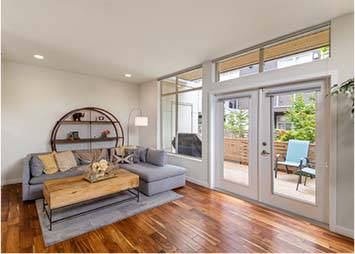
Exterior entry and egress openings represent the largest single breach risks in residential construction. Heavy-duty patio and entry systems undergo identical missile-impact and cyclic tests to ensure security across large surface areas. Sliding glass doors and hinged French doors must feature reinforced aluminum reinforcement profiles, multi-point mortise lock systems, and engineered water-shedding sill tracks to achieve TAS 202 and TAS 203 certification.
How Do Certified Impact Openings Compare to Temporary Storm Protection?
Property owners frequently analyze whether to install permanent impact glass or utilize mechanical shutter systems. When examining the operational differences of plywood shutters or impact windows, permanent structural units provide distinct functional and safety advantages.
Temporary storm barriers such as plywood panels, accordion shutters, and corrugated aluminum storm panels require manual deployment before every severe weather event. Deployment is labor-intensive, hazardous in rising winds, and impractical for traveling homeowners. Furthermore, improper anchoring or missing hardware can lead to panel detachment, turning the temporary barrier itself into flying debris.
Impact-rated glass systems provide passive, continuous structural defense. They require zero manual preparation before an incoming storm. In addition to structural hurricane protection, laminated assemblies certified by FPA and NOA protocols provide year-round secondary benefits, including:
- Continuous intrusion defense: The shatterproof interlayers resist forced entry attempts using crowbars, hammers, or brickbats.
- Acoustic dampening: The laminated glass dampens outside sound transmission, creating a quieter interior environment.
- Ultraviolet radiation filtration: Specialized glass interlayers block up to 99% of damaging UV rays, preventing hardwood flooring, rugs, and interior furniture from fading.
Why Is Proper Installation Critical for FPA and NOA Compliance?
A window’s structural NOA or FPA rating is only as reliable as its anchoring into the building substrate. Even the highest-rated impact window will fail during a storm if the anchoring fails to transfer structural wind loads directly into the building’s rough opening framing.
Every NOA document and FPA evaluation includes a rigorous fastening schedule mandated by the certifying engineer. These parameters specify:
- The exact fastener type and material (e.g., UltraCon concrete anchors, carbon steel wood screws).
- The minimum anchor diameter and corrosion-resistant coating requirements.
- The minimum substrate embedment depth into concrete masonry units (CMU), poured concrete, or dimensional lumber.
- Specific edge distance measurements to prevent masonry blowout during mechanical stress.
- Maximum on-center fastener spacing along the frame jambs, head, and sill.
Substrate preparation requires meticulous attention. If wood bucking is rotten, masonry mortar joints are crumbling, or waterproofing perimeter flashings are improperly installed, the assembly will fail under cyclical load forces. For verified installation and code-compliant permitting, contact a certified, state-licensed professional contractor to ensure that every manufacturer specification and municipal building code requirement is met.
Frequently Asked Questions
Can a product with a Florida Product Approval be installed in Miami-Dade County?
Only if the Florida Product Approval explicitly states that the product is approved for use within the High-Velocity Hurricane Zone (HVHZ). A standard statewide FPA approved solely for non-HVHZ jurisdictions does not meet the structural criteria required by Miami-Dade and Broward county building departments.
How can property owners verify a window’s Miami-Dade NOA or FPA number?
Every certified window and door contains a permanent or temporary manufacturer certification label located on the frame, inside the sash channel, or etched in the glass corner. This label displays the manufacturer’s name, structural series, and corresponding NOA or FL approval number. Property owners can input these registration numbers directly into the Florida Building Code database or the Miami-Dade County Building and Neighborhood Compliance database to view the official engineering reports.
Do Miami-Dade NOA ratings lower property insurance premiums?
Yes. Installing Miami-Dade NOA-certified impact products on all exterior openings satisfies the criteria for Class A Opening Protection under Florida’s Uniform Mitigation Inspection framework. This classification can lead to windstorm mitigation discounts on residential property insurance policies.
What is the difference between design pressure (DP) and impact rating?
Design pressure (DP) measures a product’s structural resistance to wind load forces pushing against or pulling away from the building envelope without permanently deforming the frame or breaking the glass. An impact rating measures the product’s ability to resist physical penetration from wind-borne missiles and maintain structural integrity during cyclic pressure changes after the glass has fractured.
What happens if a contractor installs windows without valid FPA or NOA documentation?
Installing windows without required approvals will result in a failed building inspection from the local municipal code authority. The municipality will withhold final permit approval until the non-compliant units are removed and replaced with certified products, leaving open building permits that disrupt real estate refinances and sales.
