
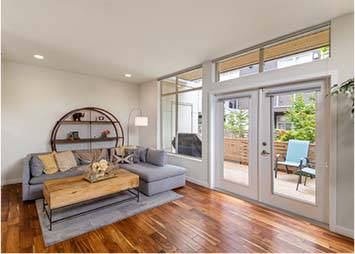


Upgrading to hurricane impact windows and doors protects a property’s structural envelope against extreme cyclonic pressures, flying wind-borne debris, and water intrusion without requiring cumbersome storm shutters. Through flexible zero-down financing structures—such as unsecured fixed-rate loans, promotional deferred-interest programs, and Property Assessed Clean Energy (PACE) financing—property owners can install high-performance, code-compliant impact glass without upfront capital. In addition to continuous passive storm defense, these architectural upgrades deliver substantial returns through annual homeowner insurance discounts, reduced monthly utility costs via advanced thermal glazing, and enhanced property market valuation.
Why Are Hurricane-Resistant Impact Windows Essential in Florida?
Florida’s geographic vulnerability places residential and commercial properties directly in the path of tropical storms and major hurricanes. The state’s coastal exposure results in severe wind events that generate destructive atmospheric pressure differentials and propel heavy debris at high velocities. When standard annealed glass encounters wind-borne debris during a storm, the panes shatter instantaneously. This sudden breach in the building envelope allows high-velocity winds to enter the interior, creating an explosive upward pressure load that frequently lifts roof trusses and causes catastrophic structural collapse.
How Does the Florida Building Code Protect High-Velocity Hurricane Zones?
To prevent structural failures, the Florida Building Code mandates stringent performance standards for exterior openings, particularly within High-Velocity Hurricane Zones (HVHZ), such as Miami-Dade and Broward counties, and designated Wind-Borne Debris Regions (WBDR). Windows and doors installed in these zones must pass standardized testing protocols, including large missile impact tests (firing a 9-pound 2×4 lumber projectile at 50 feet per second) followed by thousands of positive and negative cyclic wind pressure loads. Certified impact-resistant windows are engineered to maintain structural envelope integrity under these extreme cyclical loads, ensuring that exterior barriers remain intact even when targeted by flying debris.
How Do Laminated Glass Interlayers Prevent Structural Failure?
The protective capability of impact glass relies on advanced lamination technology. Unlike standard glass that breaks into large, dangerous shards, or tempered glass that disintegrates into small pebbles, laminated impact glass incorporates a durable inner interlayer bonded between two structural glass sheets. This interlayer is typically composed of Polyvinyl Butyral (PVB) or SentryGlas Plus (SGP) ionoplast polymer. When extreme force fractures the exterior glass layer, the resilient interlayer absorbs the energy of the collision and adheres firmly to the fractured fragments. Because the polymer membrane remains bonded to the framing system, wind and water are prevented from entering the property, preserving internal atmospheric pressure and preventing structural compromise.
How Does Zero-Down Financing for Impact Windows and Doors Work?
While the long-term structural and financial necessity of storm-rated glass is clear, full-home retrofits require specialized capital planning. Zero-down lending structures remove initial monetary barriers by enabling property owners to complete comprehensive window and door installations with zero out-of-pocket expense at the time of signing. These specialized financial instruments distribute the total project cost over flexible multi-year schedules, replacing a large one-time capital outlay with predictable, budget-aligned monthly installments.
What Are the Most Common No-Money-Down Financing Models?
Property owners can access several structured lending vehicles through specialized home improvement programs. Through tailored financing programs, property owners can select terms that best match their financial objectives:
- Unsecured Fixed-Rate Loans: Provided by specialized financial institutions, these personal home improvement loans require no collateral or home equity. Approval is determined primarily by creditworthiness, providing fixed monthly payments and stable interest rates over terms ranging from 36 to 120 months.
- Promotional Deferred-Interest Financing: These plans feature zero-interest or deferred-interest conditions for introductory periods, typically spanning 12 to 18 months. When the total balance is settled within the promotional window, the borrower avoids interest charges entirely, making it an efficient vehicle for short-term liquidity management.
- Low-Monthly-Payment Installment Plans: Structured long-term loans extend the payback timeline up to 15 or 20 years, minimizing the impact on monthly operational budgets while delivering immediate property defense.
How Does PACE Financing Differ from Traditional Home Improvement Loans?
Property Assessed Clean Energy (PACE) financing is an alternative funding mechanism tailored specifically for wind-mitigation and energy-efficiency improvements in participating Florida municipalities. Unlike conventional bank loans, PACE financing is not based primarily on personal credit scores or debt-to-income ratios. Instead, approval is determined by available property equity, mortgage payment history, and property tax standing. The total project balance is added as a dedicated non-ad valorem assessment on the annual property tax bill. Because PACE assessments are tied to the physical parcel rather than the individual borrower, the remaining balance can often transfer to subsequent owners upon the sale of the real estate.
What Financial Returns Do Impact-Resistant Upgrades Provide?
Upgrading to heavy-duty impact products is an investment that consistently yields tangible financial returns across multiple operational categories. Beyond providing structural storm defense, certified openings deliver measurable ongoing cost reductions that help offset monthly financing installments.
How Much Can Homeowners Save on Insurance Premiums and Energy Bills?
Florida law requires residential property insurance carriers to offer wind-mitigation discounts to policyholders who demonstrate verified structural hardening. Installing certified impact glass across 100% of a property’s exterior openings qualifies the structure for the highest tier of wind-mitigation credits on the standard OIR-B1-1802 inspection form. These insurance premium reductions frequently lower annual insurance expenses by 20% to 45%, generating hundreds or thousands of dollars in recurring annual savings.
In addition to insurance credits, modern laminated glass configurations feature Low-Emissivity (Low-E) coatings and argon gas thermal barriers between panes. Low-E microscopic metallic layers reflect solar heat and block up to 99% of damaging ultraviolet (UV) radiation while allowing natural visible light to transmit freely. By minimizing solar heat gain, impact openings drastically reduce the workload placed on air conditioning systems in tropical climates, reducing monthly electric cooling bills by up to 30% and preventing the fading of interior flooring and furniture.
How Do Impact Openings Impact Overall Property Resale Value?
In coastal and hurricane-prone real estate markets, impact-resistant openings serve as a major selling point that enhances property appraisals and shortens days on market. Prospective homebuyers prioritize turnkey, code-compliant properties that do not require future capital-intensive retrofits or manual shutter deployment. Furthermore, laminated impact glass provides continuous 24/7 acoustic insulation, reducing exterior street, highway, and environmental noise by up to 70%, while simultaneously providing superior forced-entry defense against property intrusion.
Which Impact Window Styles Offer the Best Performance and Aesthetics?
Modern manufacturing allows impact-rated glass to be engineered into diverse architectural profiles, ensuring that historic, traditional, and contemporary homes maintain their design integrity without compromising structural safety.
What Are the Differences Between Single-Hung, Double-Hung, and Casement Windows?
Choosing the correct operational window design depends on spatial layout, desired ventilation, and architectural preferences:
- Single-Hung Windows: A classic design where the lower sash operates vertically while the upper sash remains stationary. Single-hung units offer exceptional structural weatherproofing, cost-effective engineering, and straightforward maintenance for traditional home designs.
- Double-Hung Windows: Both the upper and lower sashes move independently, permitting dynamic cross-ventilation. Warm indoor air naturally vents through the open top sash while cooler breezes enter through the lower opening. The sashes also tilt inward, allowing interior cleaning of both glass surfaces.
- Casement Windows: Hinged on one side and controlled via a smooth hand-crank mechanism, casements open fully outward to capture breezes. From a structural engineering perspective, casement windows excel under severe storm conditions because intense winds press the sash more firmly against the frame, reinforcing the perimeter compression seal against wind and water penetration.
When Should Homeowners Choose Sliding, Picture, or Architectural Windows?
Horizontal and fixed configurations address specific functional requirements across residential floor plans:
- Sliding Windows: Operating along durable, corrosion-resistant horizontal tracks, sliding windows provide expansive viewing areas and seamless airflow without projecting outward into exterior walkways, lanais, or patios.
- Picture Windows: Completely stationary with no moving parts, picture windows maximize daylight and offer unobstructed outdoor views. Because they are permanently sealed, picture windows deliver the highest levels of thermal efficiency and wind-load resistance.
- Architectural Windows: Custom-fabricated geometric openings—including half-rounds, arches, trapezoids, and octagons—allow homeowners to preserve distinctive architectural focal points while meeting strict HVHZ building codes.
How Do Impact-Rated Doors Protect Residential and Commercial Properties?
Exterior entryways represent the largest vulnerabilities in a building envelope. If a garage door, front entry, or patio slider fails during a hurricane, the resulting interior pressurization can compromise the entire structure. Upgrading to heavy-duty impact-rated exterior doors ensures uninterrupted structural defense across every building opening.
What Materials and Hardware Ensure Impact Door Integrity?
High-performance impact doors are constructed using dense composite fiberglass, reinforced aluminum, or heavy-gauge steel. Unlike standard hollow-core or wooden doors that can crack, rot, warp, or blow inward under pressure, impact-rated systems incorporate reinforced internal sub-frames, heavy-duty continuous security hinges, and multi-point locking mechanisms. Multi-point hardware engages the door leaf into the frame at three or five distinct structural points simultaneously along the top, side, and sill, preventing the door from being forced open by cyclonic pressure or forced entry attempts.
For outdoor transitions, impact-rated French doors combine laminated glass panels with reinforced astragals and flush bolts for historic elegance. For expansive openings, impact sliding glass doors utilize tandem stainless steel rollers and reinforced heavy-gauge aluminum tracks to glide effortlessly, supporting panel spans capable of withstanding extreme coastal wind pressures.
What Does the Impact Window Installation and Maintenance Process Involve?
The protective capability of any impact-rated glazing system depends on the precision of the physical installation. Even highest-rated laminated glass will fail if it is improperly fastened to the surrounding building substrate.
Why Is Professional Permitting and Structural Anchoring Crucial?
Every impact window and door replacement in Florida requires engineering plans, municipal building permits, and mandatory building department inspections. Professional installation requires precise bucking preparation, proper shimming, and the installation of code-specified corrosion-resistant masonry anchors placed at exact engineering intervals. Certified installers apply commercial-grade structural sealants around the frame perimeter to establish an impenetrable waterproof barrier against driving hurricane rains. Homeowners should consult the credentials and licensing about the installation team to confirm general contractor licensing (such as CGC status), comprehensive liability insurance, and factory-authorized installation certifications.
How Should Property Owners Maintain Hurricane Glass and Hardware?
While impact-rated products are engineered for decades of durability, regular maintenance preserves optical clarity and smooth mechanical operation in humid, salt-rich environments:
- Glass Cleaning: Wash laminated glass regularly using mild, non-abrasive liquid soap and clean water applied with a soft microfiber cloth or squeegee. Avoid harsh chemicals, ammonia, or razor blades that can scratch glass surfaces or degrade protective Low-E coatings.
- Track Maintenance: Keep sliding window and patio door tracks clear of sand, dirt, and debris by vacuuming and wiping the tracks periodically. Ensure weep holes remain unobstructed to allow collected rainwater to drain outside freely.
- Hardware Lubrication: Apply a dry silicone spray lubricant to locks, rollers, hinges, and crank operators twice annually to prevent corrosion and maintain smooth operation. Avoid petroleum-based lubricants, which attract sand and grit.
To evaluate specific home hardening requirements and explore custom payment programs, property owners can directly contact a certified project consultant for a comprehensive property assessment and structural analysis.
Frequently Asked Questions
Can you finance impact windows with no money down?
Yes. Property owners can finance 100% of an impact window and door installation through zero-down financing options, including unsecured personal home improvement loans, promotional zero-interest financing plans, and municipal PACE programs. These options eliminate initial out-of-pocket costs and allow balance repayment via manageable monthly installments.
Do impact windows eliminate the need for hurricane shutters?
Yes. Certified impact windows provide passive, 24/7 storm protection that meets or exceeds Florida Building Code standards for High-Velocity Hurricane Zones. Once installed, they eliminate the need to store, handle, or manually install plywood, storm panels, or accordion shutters prior to severe weather events.
How do impact windows lower home insurance rates in Florida?
Florida law requires insurance companies to provide windstorm mitigation discounts to properties where all exterior openings are protected by certified impact-resistant systems. Once verified via a standard Wind Mitigation Inspection (Form OIR-B1-1802), these credits frequently reduce annual property insurance premiums by 20% to 45%.
What is the difference between PVB and SGP interlayers in impact glass?
PVB (Polyvinyl Butyral) is the standard flexible interlayer used in residential impact glass to hold shattered glass together under impact. SGP (SentryGlas Plus) is a structural ionoplast polymer interlayer that is five times tougher and up to one hundred times stiffer than PVB, making it ideal for high-pressure applications, commercial buildings, and oceanfront properties subject to intense wind loads.
How long does the impact window installation and permitting process take?
Custom manufacturing of impact-rated windows and doors typically takes several weeks, during which municipal building permits are obtained. The physical installation process for an average single-family home generally takes two to five days, followed by a mandatory final inspection by the local building department to verify code compliance.
